



Understanding Questions
Inferences and Predictions
Working out what is not said, and what happens next.
- Mastered by
- Simple picture inferences from about 4
- Practice items
- 61
- Sections
- 11
Play it
Each one opens full screen, already set to this skill.
What this skill is
An inference is an answer the text or the picture does not give you directly. "The girl is holding an umbrella and her coat is wet" does not say it is raining, but that is the answer. A prediction is the same skill pointed forwards: what is about to happen, given what you can already see. Both need the child to hold several clues at once and put them together, which is why they come after literal WH-questions rather than beside them.
What to expect
A child who is not ready usually says "I do not know", or takes the clue literally - asked why the boy is rubbing his tummy, they may say it is itchy. That is not a wrong answer so much as a sign the child has not yet joined the clues together. Say the clues back in a row and let the child make the last step: "his plate is empty, and he is rubbing his tummy..." Expect the guess to arrive before the reason does, and the reason to come with practice.
Try this at home
When to refer
Put it into practice
Tap any item below to open it full screen, one at a time, so a child can answer without reading the answer first.
These activities are a starting point, not the practice itself. A structured task is a good way to introduce a form and to find out whether a child has it yet. What actually moves it into everyday speech is using it in the real world and in ordinary play — which means the four things below matter more than finishing the list.
Recast
Say their sentence back correctly, without asking them to repeat it. Child: “he goed.” You: “he went! Where did he go?”
Expand
Add one or two words to what they said and hand it back. Child: “big truck.” You: “a big red truck!”
Simplify what you ask
Cut a long instruction into single steps and say them in the order they happen, rather than repeating the long one louder.
Follow their lead
Use whatever they are already playing with. A form practiced on something they chose is the one that shows up again tomorrow.
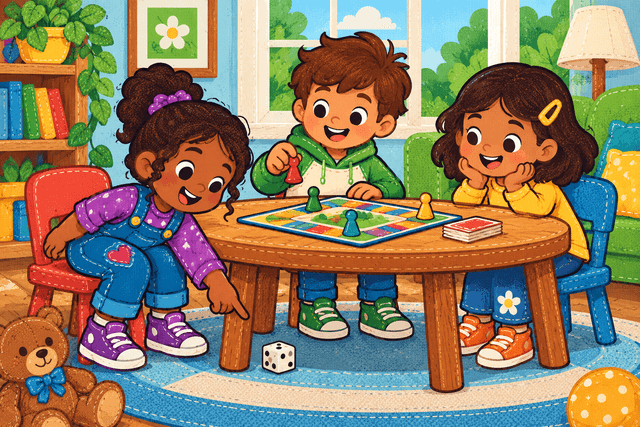
Picture: The Board Game
4 itemsLook at the whole scene. Ask what might be happening and which details support the idea. Accept another sensible answer with evidence. Tap any item to open it full screen.
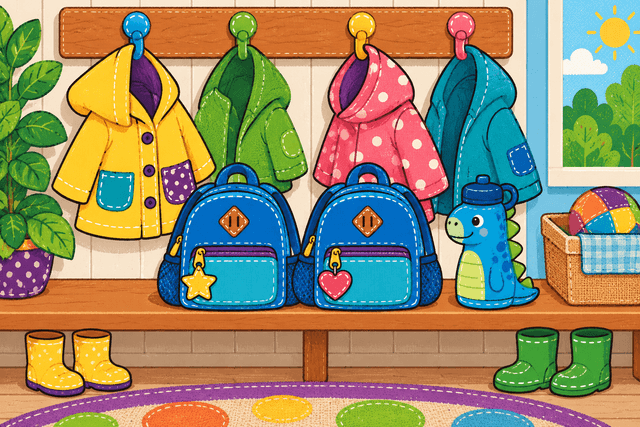
Picture: The Backpacks
4 itemsLet the child compare details before answering. A useful answer names the clue, not just a guess. Tap any item to open it full screen.
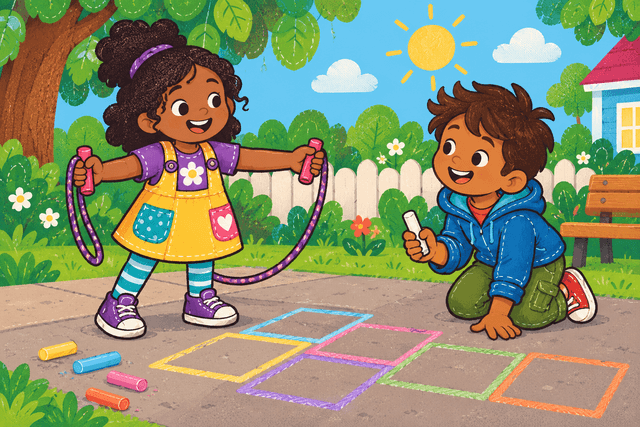
Picture: At Recess
4 itemsAsk for a possible idea and the visual clue. The children could have different plans, so let the answer stay uncertain. Tap any item to open it full screen.
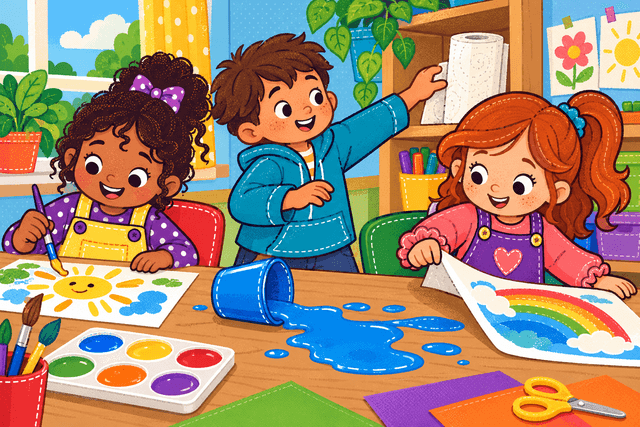
Picture: The Art Table
4 itemsTalk about what each child can see. Predict what may happen next and how the group could respond. Tap any item to open it full screen.
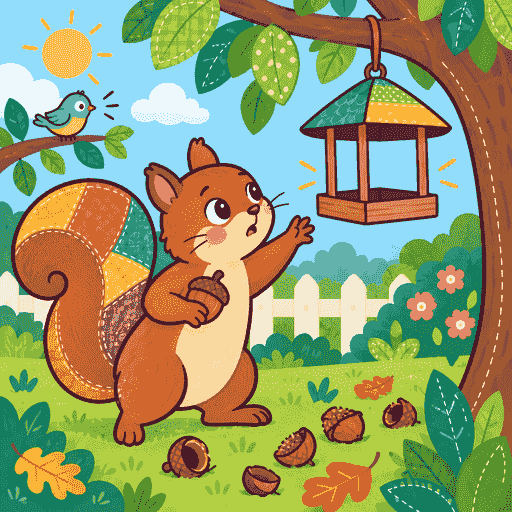
Picture: The Squirrel
4 itemsTap any item to open it full screen.
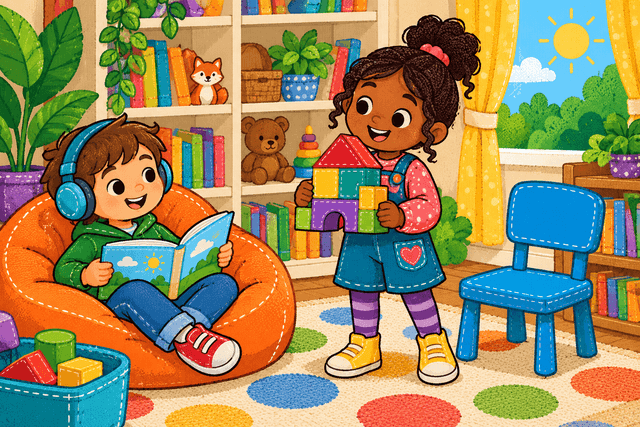
Picture: The Quiet Corner
4 itemsThere is no single correct guess about the reader. Ask what the reader can and cannot hear, and how the builder could find out what she wants. Tap any item to open it full screen.
Who Am I?
8 itemsRead one short clue card aloud. Ask who it might be and which detail helped. Accept another answer when the clues support it. Tap any item to open it full screen.
Where Am I?
8 itemsRead one short clue card aloud. Ask where it might be and which clue helped. Tap any item to open it full screen.
What Am I?
8 itemsRead the short riddle aloud. Ask what it might be and which clue helped. Tap any item to open it full screen.
When Is This?
6 itemsRead one short clue card aloud. Ask when it might be and which detail helped. Tap any item to open it full screen.
What Happens Next?
7 itemsRead a short situation aloud. Ask what might happen next and why. Accept another sensible prediction supported by the clues. Tap any item to open it full screen.